Tips

SECURE BIKE PARKING

Note:  Originally published on January 16th, our friends at the Minneapolis Bicycle Coalition posted this insightful interview about secure bike parking with Dero VP & General Manager Andy Lageson. Founded in 2009, MBC advocates for a city where bicycling is encouraged and everyone feels comfortable riding.

By Alex Tsatsoulis, via the Minneapolis Bicycle Coalition blog

Getting your bike stolen can be devastating, especially if it’s your primary way of getting around. While you can minimize your risk by using a quality lock, and increase your chance of getting a stolen bike back by registering your bike with the police; where you park your bike matters too. We asked Andy Lageson, VP and General Manager of local company Dero Bike Racks about how they’re working to make bike parking more secure in Minneapolis.

What are the most common reasons bikes get stolen in Minneapolis?

Andy: Making the right bike lock purchase is key to deter bike thieves. Using the wrong type of lock is the most common mistake made by cyclists. We recommend that people only use U-locks or non-cable bike locks, such as Kryptonite chains or the Abus folding locks. Never use just a cable lock; they are quickly and easily cut. A cable lock should only be used in conjunction with a U-lock or chain. It’s also important to be aware of what you’re locking your bike to and how you’re securing your bike. No matter what, always lock your bike – I know it’s tempting to run into your favorite store and leave the bike unlocked for a minute, but it’s just not a good idea…always lock your bike, even if it’s just for 30 seconds. A lot of theft occurs because of this split-second decision.

Recently The Oregonian ran an article about a new trend in bike thieves cutting through bike racks to steal bikes. Has that been an issue you’ve seen with bike racks in Minneapolis? Are the racks Portland uses similar to the Dero racks the City of Minneapolis uses?

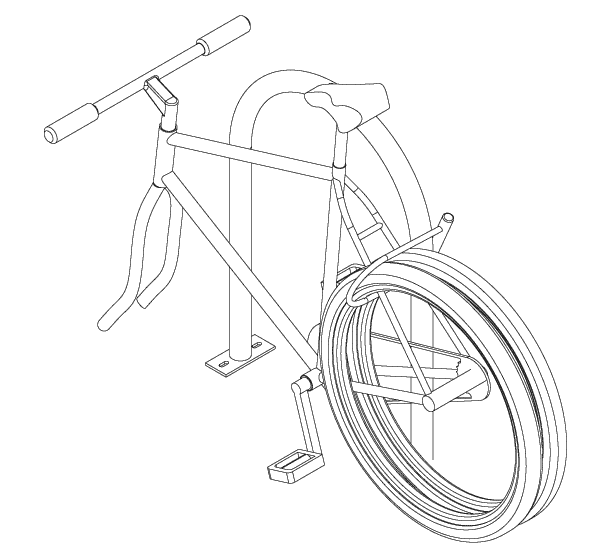
Andy: I think we’ve been pretty lucky in the Twin Cities metro area. We haven’t met with these types of issues here much. Based on the photo from the article, someone used a pipe cutter to steal the bike. (Counter to the article’s assumption, the cut is too smooth to be a saw.) Portland uses a bike rack manufacturer in the Northwest that uses a lighter gauge material for their racks – they probably used this based on cost issues. The bike racks that Dero manufactures use a heavier duty schedule 40 steel pipe. Both racks are susceptible to a pipe cutter, but a heavier duty rack will take longer to cut and may deter bike thieves. Another issue is that the bike racks use round pipe, which thieves can cut with a pipe cutter. Any racks that are inverted-U racks or hoop racks made with round pipe are at risk to pipe cutting. The Dero Bike Hitch Rack that the City of Minneapolis uses won’t work with pipe cutters, since the pipe cutting tool can’t spin all the way around the locking arms (this is good news).

orange bike racks

One of the suggestions in that article is filling bike racks with concrete to make them more secure. Is that something Dero has considered, and what other technologies might work better to stop bike thieves?

Andy: We’ve experimented with filling our Hoop Racks internally with concrete and that was a nightmare. It’s not economical, takes a lot of labor and time, and has to be done onsite at the installation location. A better option is to weld a chain on the inside of an inverted-U bike rack from end to end. We have manufactured a large amount bike racks for the City of Los Angeles and have included a chain welded to the inside of the rack. Pipe cutters can cut the outer pipe, but won’t be able to get through the interior chain. The chain acts as a separate safety feature.

Beyond locking to a secure rack, what other advice would you give people looking to secure their bikes in the best manner possible?

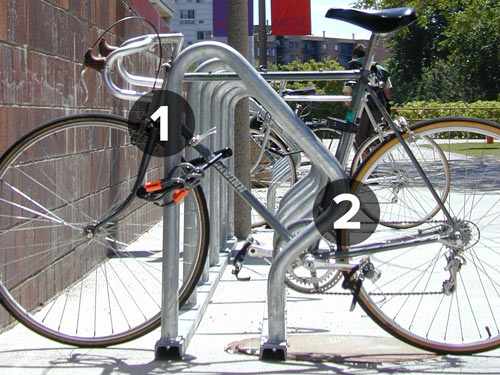
Andy: If a bike rack isn’t available to lock to, make sure the structure you choose is made of steel, is strong and durable, isn’t bolted together (bolts can be removed), and is firmly installed to the ground or a wall. As a rule, remember to make sure your bike doesn’t impede pedestrian right of ways or access to buildings. For short-term parking, lock to a closed steel structure like a bike rack (not a tree or short sign post with no sign). Make sure that you can’t remove your lock from whatever you are locking to and at least one wheel to the bike rack is secured (this might not work for mini U-locks). For long-term parking, we recommend using a U-lock to lock the frame and one wheel (this might not work for mini-U-locks) and a cable lock to secure both wheels in place. Also, if the bicyclist has an expensive seat like a Brooks saddle, we recommend using a short chain to secure the saddle rails to the seat stays.

Do you have any advice for businesses or others installing new secure bike parking on how to place it to minimize theft?

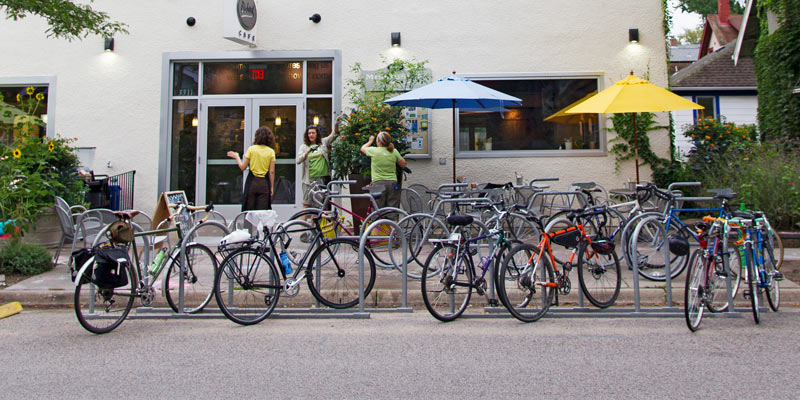
Andy: The best place for exterior bike parking is right next to the front entrance of a business. These locations usually offer window site lines, great lighting, and customer foot traffic, which all helps to keep thieves away. For interior settings like parking garages, bike rooms, and bike shelters, secure bike parking areas are the way to go. These facilities should consist of a fully enclosed room or cage with user key access, great lighting, and cameras. For home garages, locking it at night isn’t enough. Be sure to anchor a bike rack to the wall or ground and then lock your bike to it. Also install motion sensor lighting if you can. Dero along with other local retailers sell these types of products for home users. I highly recommend investing in these measures. It’s the worst when your bike is stolen – I know from personal experience.
News

Dero Begins its 20th Year Anniversary with a Bang: Four New Bike Racks and New Website

Since 1995, Dero has introduced innovative bike parking to the world and continues this tradition with the new Ultra Space Saver Squared, Cycle Dock™, Type Rider™, and Alley Rack™. The new website highlights these bike racks, and features design guides, how-to videos, product galleries, a robust online store, and more.

Minneapolis, MN – Since 1995, Dero has introduced innovative bike parking to the world. Now entering its 20th year, Dero continues this tradition with the new Ultra Space Saver Squared, Cycle Dock™, Type Rider™, and Alley Rack™. A redesigned website highlights these bike racks, and features design guides, how-to videos, product galleries, a robust online store, and more. These new online resources will help customers find the best bicycle parking solutions for their project.

NEW PRODUCTS

2015-new-products-x

Ultra Space Saver Squared: Dero’s Ultra Space Saver Squared builds on its popular predecessor, the original Ultra Space Saver. Both provide vertical bike parking that maximizes space efficiency, but the Squared goes even further:

  • Sliding Arm System: Adjustable sliding arms make it easy for customers to best utilize their space. It also creates flexibility to make sure spacing follows city requirements as they evolve.
  • Square Tube Arm: Pipe-cutter resistant squared steel tubing makes the Ultra Space Saver Squared more secure than the original.
  • Angled Arm (optional): This option provides an extra six inches of aisle space.

Like the original, the Squared is u-lock compatible and accommodates bikes with fenders; features an easy to install, modular system; and can fit in nearly any space. Additional options include: wall-mount, floor-mount, and double-sided.

Cycle Dock™: The Dero Cycle Dock™ is a solid laser cut steel plated bike rack, providing high security that is pleasing to the eye. With unassuming wheel stops at its base, the Cycle Dock™ offers three points of contact for extra bike stability, while the wide-spacing between its two arms decreases handle bar conflicts when parking two bikes.

Type Rider™ Racks: The line of Type Rider™ Racks offers customers the chance to have fun with letters and symbols. These laser cut, hand welded bike racks can be made to spell out a word, brand name, and even hashtag. They are available in a wide array of finishes and colors to create eye-catching bike parking.

Alley Rack™: One of the first Dero racks created in the mid-1990s, the Alley Rack™ has been reincarnated, redesigned, and reengineered to be better than ever. The Alley Rack’s™ arm swings a full 180º, offering a variety of locking positions to accommodate for limited space, and its 5/8″ thick steel construction provides a strong deterrent to would-be thieves.

2015-new-products-xx

NEW WEBSITE

Dero is proud to introduce customers to a new and improved www.dero.com. Beyond the stunning design and images, the website offers new features to make it easier for customers to find the perfect bike parking solutions for their project. A large selection of Dero products are now available to purchase via the online store, as long as quantities can be shipped via FedEx. For more complex orders, quantity discounts, quotes and general questions, customers will now have the option to chat with our friendly and informative sales team online.

Customers can also find ideas and inspiration from the new Dero Design Project Guides, starting with Streetscapes, Bike Rooms, Campus Settings, and Park and Rec. All product pages now feature more photos than ever before and how-to videos have started to pop-up, plus the Dero Blog has been redesigned. Be sure to visit the website to keep up-to-date with the newest bike parking resources and Dero news.

ABOUT DERO

Since 1995, Dero has been supplying innovative bike parking and bicycle transit solutions to architects, contractors, municipalities, higher education, and parks and rec. Its bike racks, repair stands and pumps, shelters, and lockers are high quality, thoughtfully designed and secure. Dero also offers the award winning Dero ZAP, an automatic system to track bike commuters. Dero is located in Minneapolis and is proud to support biking locally and nationally.

Bike Parking Guide

Bike Parking Guide

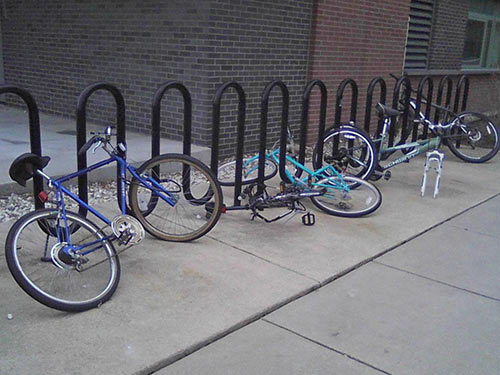
Not all bike parking is created equal. Bad bike parking happens. Sometimes it’s an accident or a mistake. But with a little planning and consideration, bike parking can be easy. At Dero, we like to see good bike parking. We also don’t like to see money wasted on solutions that don’t work. What follows are a few basic guidelines to help make your bike parking project a success.

    Enter your email address to get the Bike Parking Guide and start receiving our monthly newsletter.


    Choosing a Site

    Identify Current Problems

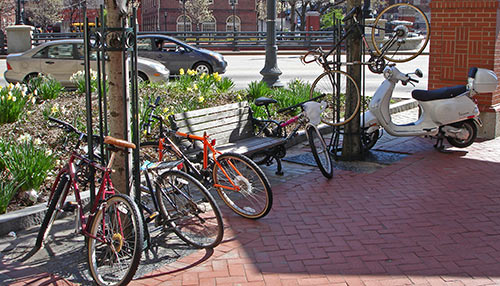
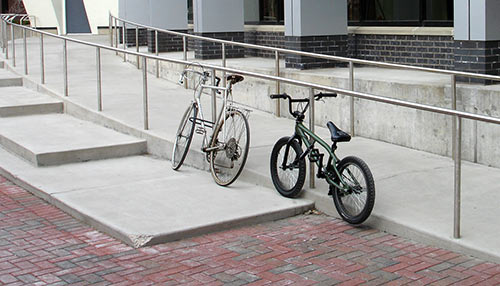
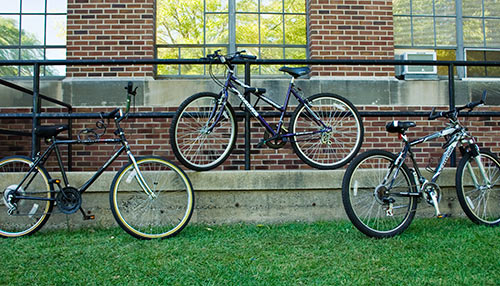
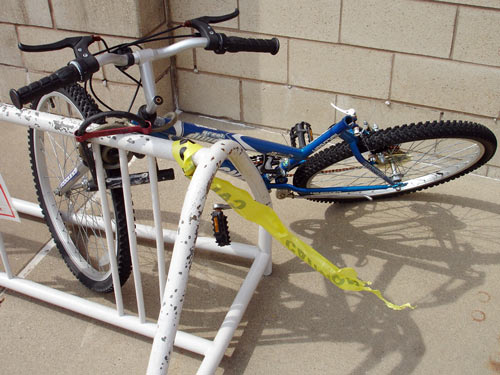
    When no parking infrastructure is provided, bicyclists improvise and lock their bikes to anything that seems secure. This can result in damage to fixtures such as light posts and railings, as well as causing hazards to pedestrians. Most importantly, improvised solutions do not guarantee secure parking for riders.

    Make it Visible and Prominent

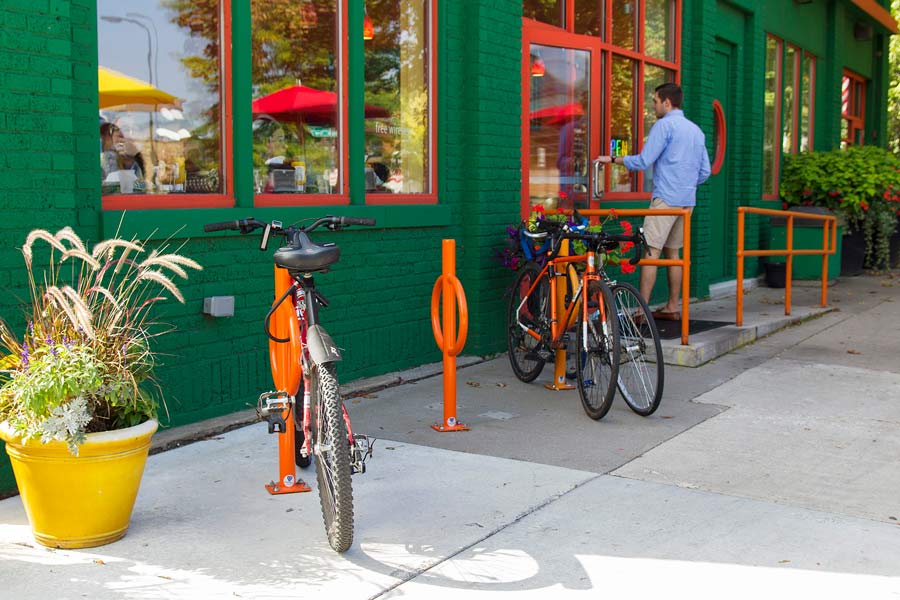
    If bicyclists can’t find your bike rack, they won’t use it. We recommend placing a bike rack within 50 ft of an entrance or at least as close as the nearest car parking stall. Have the bike rack painted bright colors and use signage to direct bicyclists to the area you designate for bike parking.

    Racks placed behind buildings or in other out-of-sight locations give thieves more time to work unnoticed.

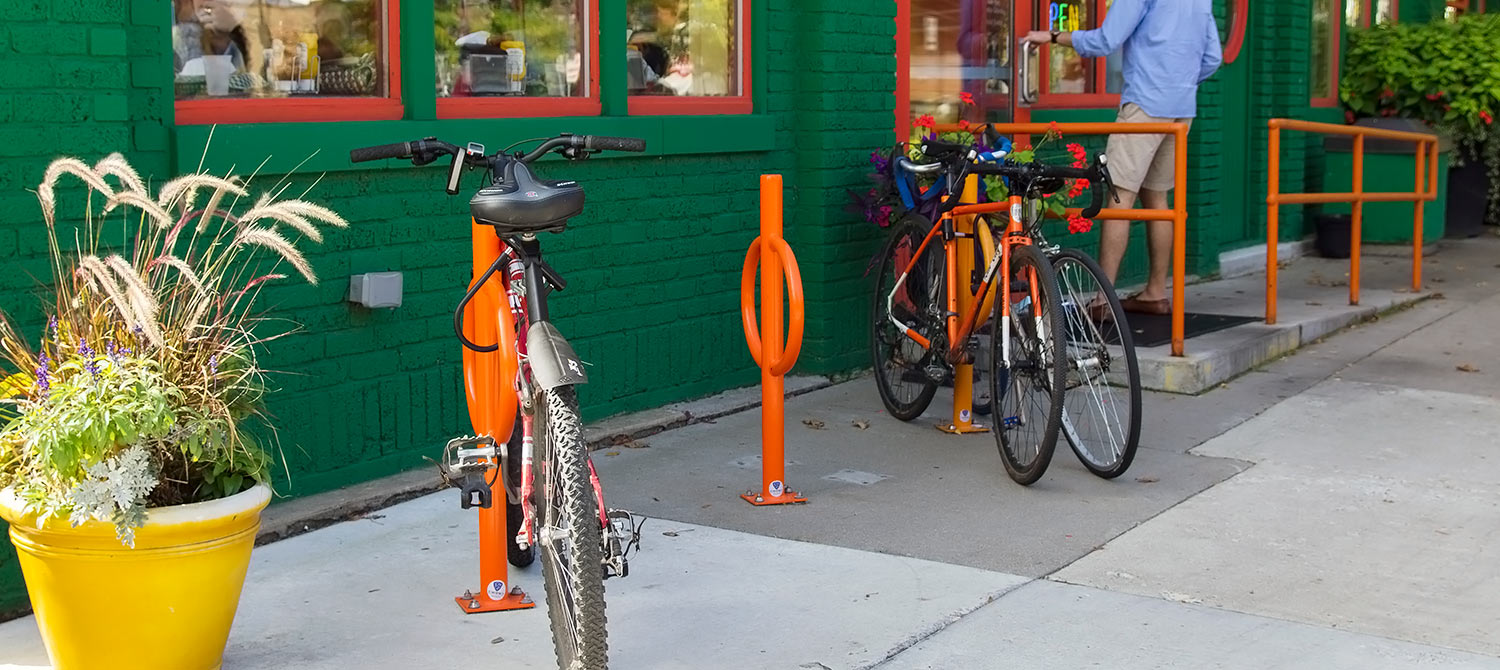
    bike rack by front door

    Space Use

    Demand

    How many bikes do you need to park at your business, office, or residential building? The easiest baseline way to answer this question is to contact your city or town government and confirm any minimum ordinances or mandates applicable.

    Capacity and Space Use

    Once the amount of parking has been determined, you will naturally need to ensure that adequate space is provided. Below there are several diagrams to show you how different bike parking systems fill a particular space with optimal spacing and setbacks.

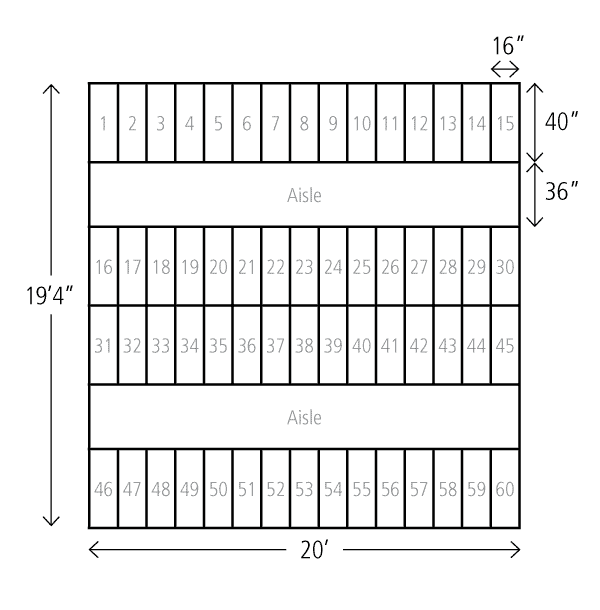
    For parking systems which park bikes vertically, the diagram below offers an approximate calculation for the space needed to park bikes.

    A 20’x20’ area should be able to park about 60 bikes.

    20x20 guide

    Setbacks

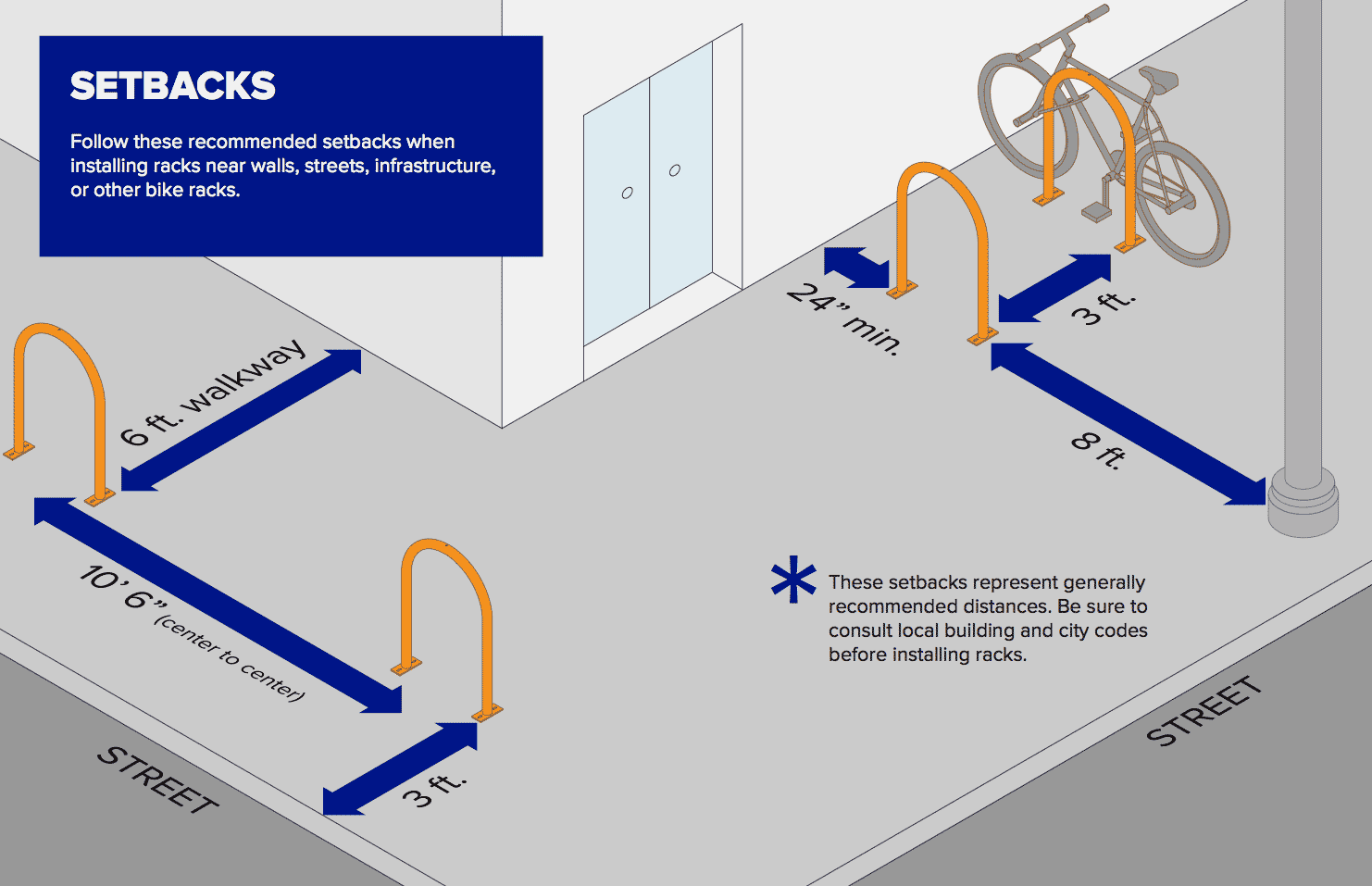
    Of course, a bike rack can only park the maximum number of bikes if it is has proper setbacks from obstructions. Also, a bike rack shouldn’t obstruct other objects such as street furniture, access doors, or right of way.

    Below are some general guidelines for setbacks. This illustration is based on recommendations by the District of Columbia Department of Transportation and the City of Minneapolis Department of Public Works.

    setbacks

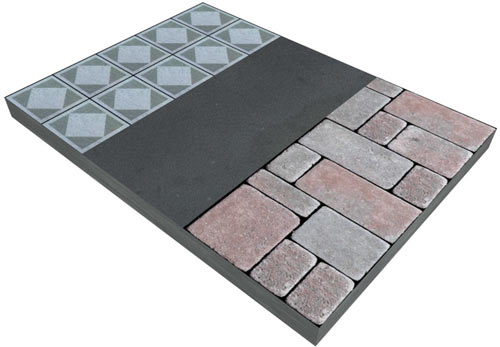
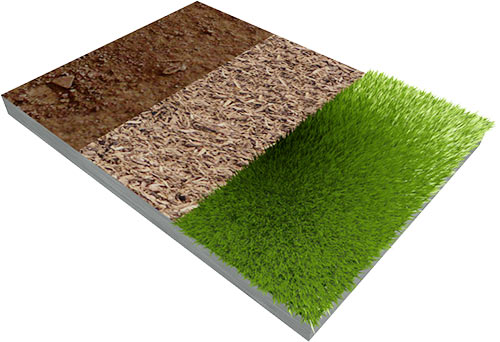
    Installation Surfaces

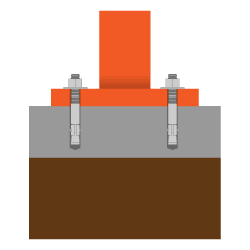
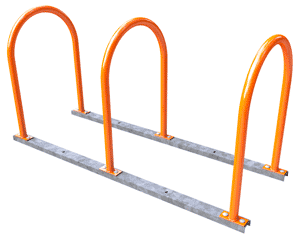
    Mounting Options

    Let Your City Be Your Guide

    Many cities and communities already have bike parking guidelines, ordinances, and even bike rack cost share programs. You can find answers to questions concerning required bike parking capacity, placement, and right-of-way. Check with your community’s website. Usually, bike parking information may be found within a city’s public works or parks and recreation department. Here are some city resources we have found.

    Or go straight to the bicycle advocacy organizations who are on their bikes every day, and who know from first hand experience which areas could be more bicycle friendly. They can also give advice on their preferred style of bicycle rack. Below are websites of several city and state bicycling organizations in the United States.

    Choosing Your Racks

    Security

    ulock

    With well over a million bicycles stolen every year in the United States and the increasing sophistication of today’s bikes, security is by far the most important issue for bicyclists. Some bikes can cost several thousand dollars, so people want to be sure that when they lock their bike up it will still be there when they return.

    We highly recommend that people use u-style locks to secure both the wheels and frame of their bike, since cable locks are flimsy and easy to cut. Be sure the rack you chose is u-lock compatible if there is open access to the bikes.

    Of course, knowing how to lock your bike properly is just as important as the lock you choose. Remember to securely fasten wheels (especially if you have quick-releases) as well as the frame.

    Good Bike Frame Support

    Consider Unique and Creative Solutions

    shelter

    Bike Shelters

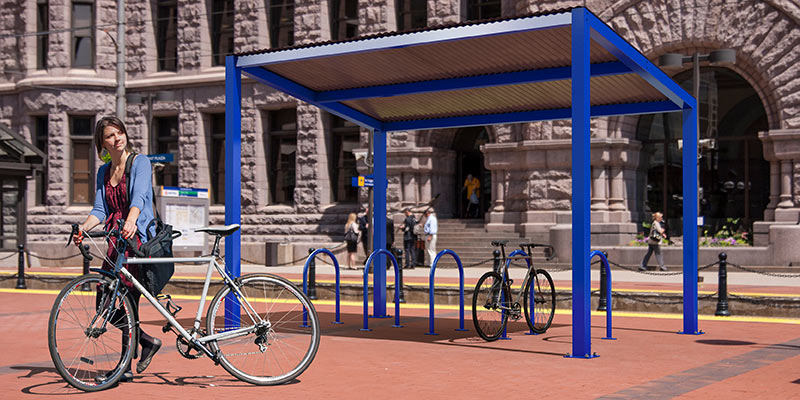
    Many communities and campuses are finding that covered bike parking encourages people to travel by bike. Shelters offer outdoor bicycles more protection from the elements than uncovered racks. A shelter’s canopy keeps rain, snow, and sun off of bikes and their riders. Shelters also help with LEED certification.

    Browse Bike Shelters
    bike room

    Bike Rooms

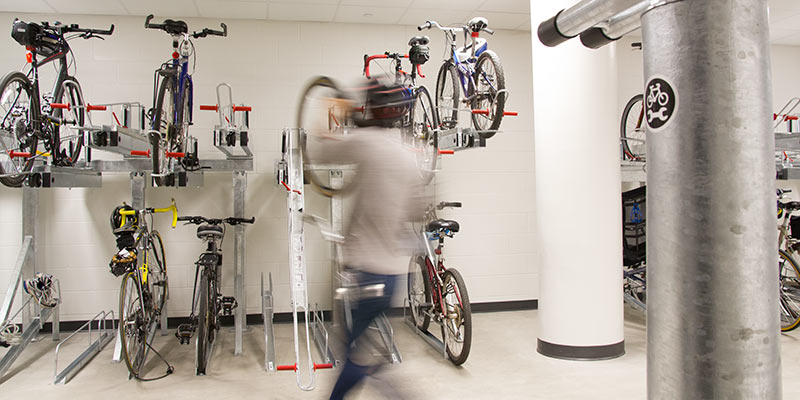
    Bike rooms provide a great opportunity for high security, long-term bike parking when there is not place outside to put shelters or lockers. Dedicated indoor bike storage rooms are praised by cyclists for residential and commercial use.

    View Bike Room Design Guide
    onstreet

    Bike Corrals

    Several communities have begun implementing on-street solutions for bike parking. New York City, Portland, OR, Santa Barbara, CA and Minneapolis, MN have all removed car parking spaces to provide additional bike parking. This solution is ideal in high density areas with small sidewalks and moderate pedestrian traffic. Portland’s program has been so successful that businesses have begun requesting removal of car parking in favor of bike parking in front of their stores and offices.

    Browse On-Street Bike Parking
    event

    Temporary Parking

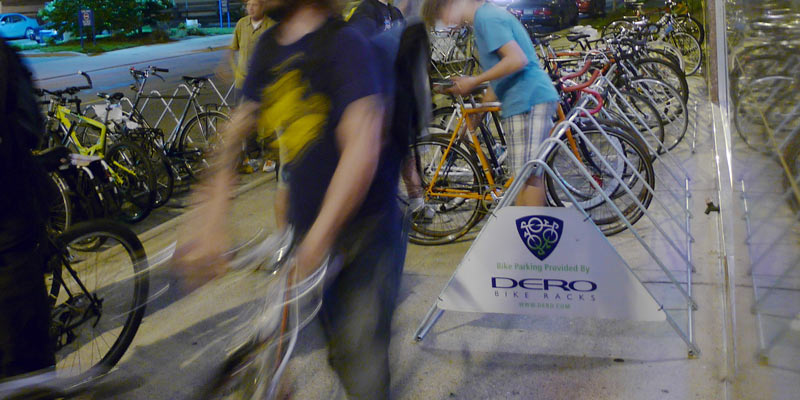
    Often overlooked, event parking is a critical building block for bicycle friendly communities. State fairs, music festivals, and sporting events draw hundreds or thousands of attendees. Yet, many organizers often forget the bike parking altogether, leaving cyclists stranded and area parking lots overcrowded. Some cities, such as San Francisco, have passed mandatory minimums for valet bike parking at events. Successful bike parking at events also contributes to a venue’s overall green image.

    Browse Temporary Bike Parking

    Aesthetics

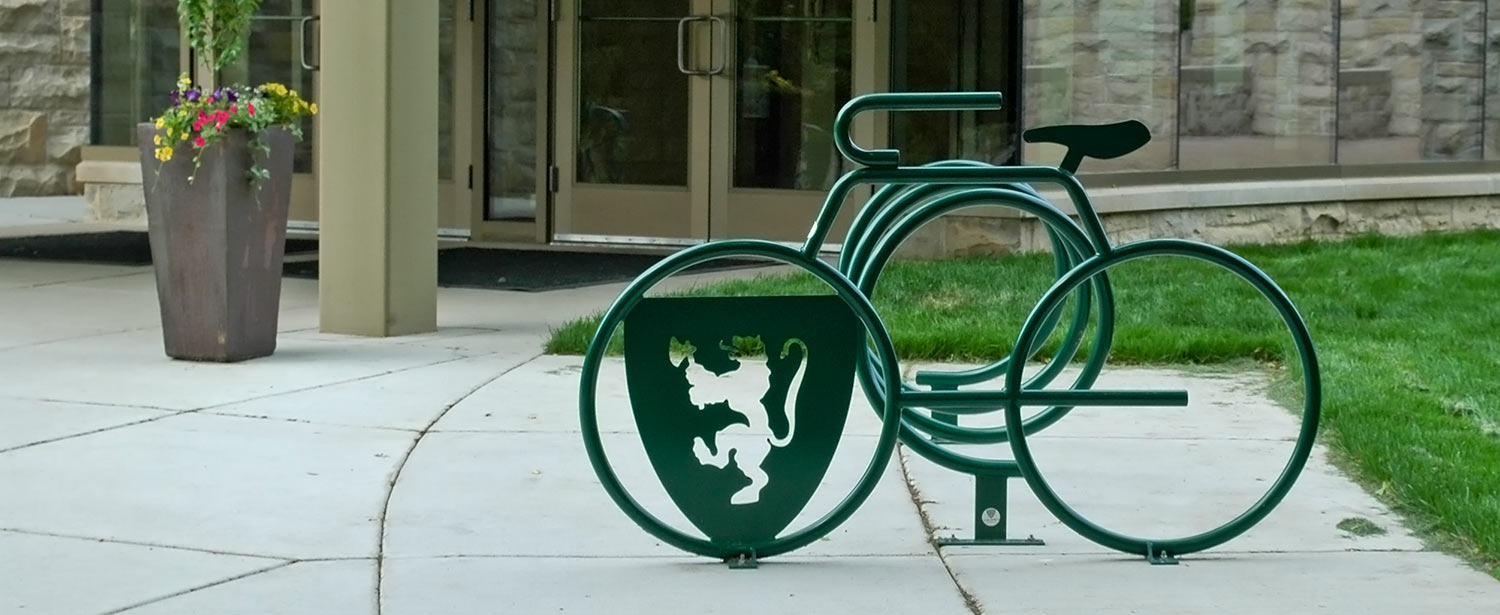
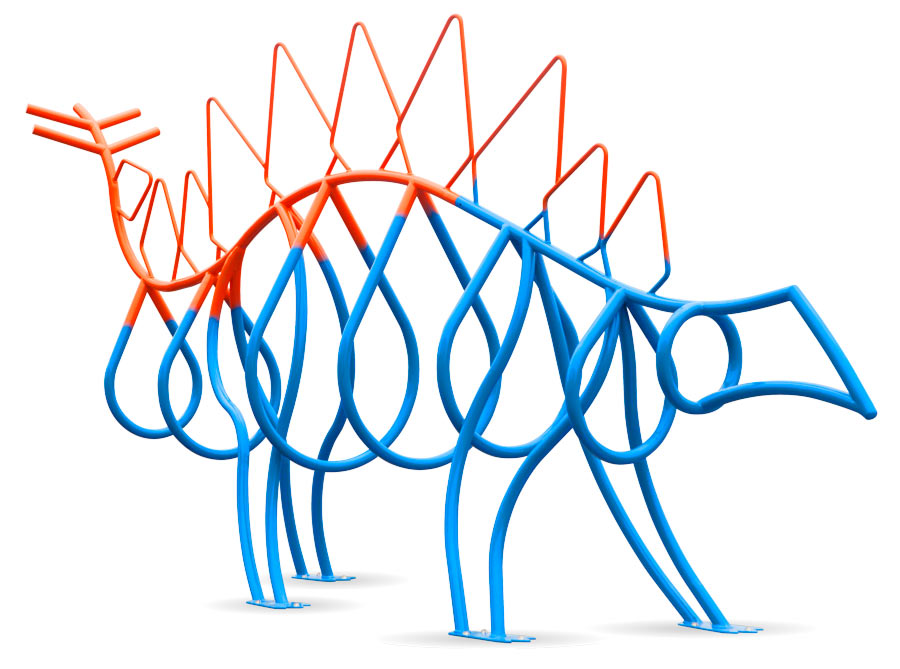
    Who said bicycle racks had to be ugly? Several bike rack manufacturers are producing racks that could easily qualify as street art. A well-designed bike rack enhances the visual appeal of the area in which it is placed. Though custom racks cost more than a standard bike rack, the returns on your investment include heightened visibility and improved public perception of your organization’s values.

    Browse Custom Bike Racks aesthetics

    Additional Resource:

    The Association of Pedestrian and Bicycle Professionals (APBP) has its comprehensive “Bicycle Parking Guidelines” available for purchase here.

    News

    New Dero Decker Takes Bike Parking To The Next Level

    FOR IMMEDIATE RELEASE Minneapolis, Minnesota (January 15, 2010) – The Dero Bike Rack Company, an industry leader in bike parking, has developed an innovative new, two-level bike parking system, the Dero Decker. By stacking bikes on a two-tiered system, bike parking capacity doubles. Unlike other double decker systems, our lift-assist top trays slide down to just inches from the ground, requiring only minimal lifting of the bike to secure it into the tray. The patent pending Dero Decker has a front wheel safety locking lever and tray dampers to provide safe lowering of upper trays. Rolf Scholtz, founder of Dero Bike Racks says, “We were really looking to make the Dero Decker the most space efficient two-level bike parking system on the market”.  The vertical load trays effectively reduce the required aisle space, giving the system the smallest footprint of any two level bike parking system available. This efficient use of space is ideal for bike centers, bike rooms and parking garages where space is at a premium. The Dero Decker is modular and available in single and double-sided configurations. For more information contact: Dero Bike Racks, [email protected], 800-357-7574 or www.dero.com/products/derodecker