Making biking a practical everyday transportation option takes more than access to a bike. It takes the right infrastructure to make every ride feel convenient, secure and accessible. As communities look for ways to expand transportation options, one thing is becoming increasingly clear, providing access to a bike is only part of the solution. Riders also need a safe place to park, convenient access to charging eBikes and connections to other transportation options that make everyday trips easier.
At Dero, we believe bike parking plays an important role in building that connected transportation network. Our work with Smart Commute in the north Denver metro area demonstrates how thoughtful infrastructure can help remove barriers to biking and support more flexible ways to get around.
Smart Commute is a nonprofit transportation management organization (TMO) working to expand transportation choices across the north Denver metro area. Through partnerships with local governments, employers, transit agencies and other organizations, Smart Commute develops programs that help people get where they need to go without relying solely on a car. Its work ranges from carpooling and vanpooling to innovative programs like an eBike Library and low-stress bike routes mapping.
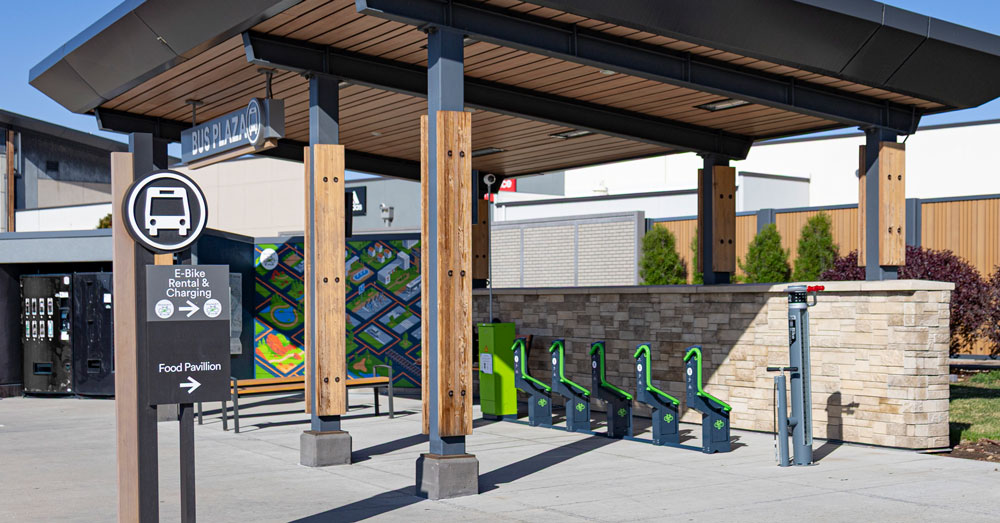
One of its most innovative efforts is the development of smart eHubs, which provide free and secure bike parking and charging for both traditional bikes and eBikes. The idea behind these eHubs addresses a challenge that can easily be overlooked in conversations about active transportation: access to a bike does not automatically make biking a viable option for daily life.
As Smart Commute learned through its Qualified-Income eBike Program, riders also need a convenient and secure place to leave their eBikes when they arrive at work, connect to transit or visit a local destination. This is particularly important for eBikes and other high-value bikes, where concerns about theft can discourage people from riding in the first place. Without reliable parking, a bike may remain a recreational option rather than becoming a practical choice for commuting or running errands.
Bike parking is often treated as a finishing touch to a transportation project. In reality, it can influence whether someone chooses to ride at all. eBike users may also need access to charging to make longer trips and daily commutes more manageable.
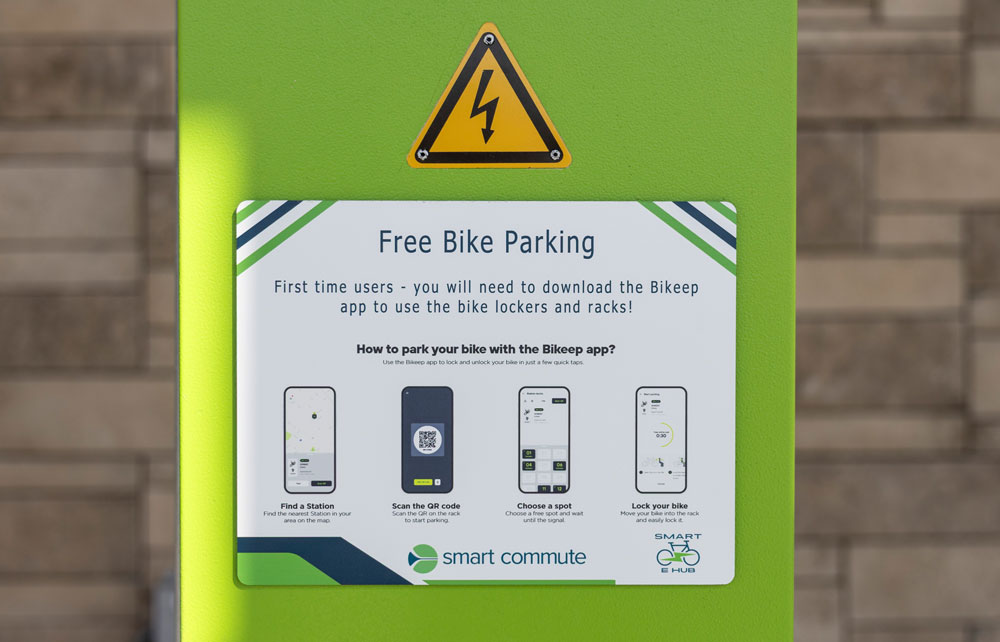
To help address these needs, Smart Commute incorporated Bikeep secure eBike parking and charging stations into its Smart eHubs. The system combines secure parking, charging and user access in one solution. Features such as cameras, wired alarms and app-based access provide additional layers of security and convenience. For Smart Commute, these features help make the Smart eHubs a more complete mobility resource, supporting people using their own eBikes/bikes while also creating infrastructure for eBikes offered through its eBike Library rental program.
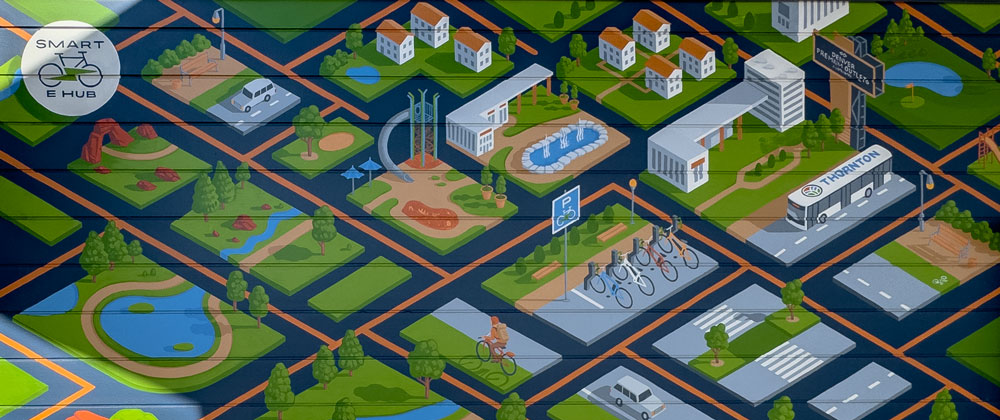
The goal is not simply to give riders somewhere to leave their bikes. It is to make biking a more practical part of how people move through their communities. The future of transportation is not about finding one solution that works for everyone. It is about giving people multiple choices that work together. A rider might bike to a transit station and take the bus for the remainder of a commute. Someone else might use an eBike to run errands that would otherwise require a car. Another person might try an eBike for the first time through a community lending program before deciding whether it fits their lifestyle. These trips become easier when the supporting infrastructure is in place. Smart Commute’s Smart eHubs are designed to connect riders with transit, low-stress bikeways, trails and local destinations. The Bikeep app also allows users to find and access participating stations throughout the Denver metro area, extending the usefulness of the infrastructure beyond a single location.
This type of connectivity is an important consideration for communities investing in transportation improvements. Bike parking should not be viewed in isolation. Its location, security features and relationship to nearby destinations all influence how effectively it serves riders. When secure parking and charging are integrated into a broader network, communities can create more opportunities for people to combine transportation options and make trips without driving.
Building better transportation infrastructure also requires more than installing equipment and moving on to the next project. It means listening to the people who use it and learning from their experiences. Smart Commute reports that Bikeep users appreciate the added security features and the ability to contact Bikeep and Smart Commute representatives when they need help accessing the racks or lockers. The organization is seeing repeat users and hopes to continue growing that base.
Looking Back and Planning Ahead
Just as importantly, Smart Commute is using lessons learned from each installation to inform the design, placement and features of future Smart eHubs. That approach reflects a broader principle for transportation planning: successful infrastructure responds to the needs of the community it serves. What works in one location may need to be adapted for another based on travel patterns, nearby transit, available bikeways and the needs of local riders.
Partnerships between transportation organizations and infrastructure providers help turn those insights into practical improvements. By combining community knowledge with solutions designed around real rider’s needs, projects can evolve to better support the people who depend on them.
As communities continue to explore sustainable and accessible transportation, eBikes, secure eBike/bike parking, charging, transit and low-stress cycling infrastructure will play increasingly connected roles. No single investment will solve every transportation challenge, but removing one barrier at a time can make a meaningful difference in how people travel.
Smart Commute’s work shows what becomes possible when bike parking is treated as an essential part of the transportation network rather than an afterthought. By pairing secure parking and charging with eBike access and connections to other travel options, the Smart eHubs are helping create opportunities for more people to consider biking as part of their everyday routines.
At Dero, we see this as an important direction for the future of bike infrastructure. The goal is not just to provide a place to park a bike. It is to help communities make biking a convenient, secure and connected option for more people. Because when the infrastructure works for riders, biking has a better chance of working for everyday life.