Case Study, Dero, Projects

Beyond the Bike Rack: Building a More Connected Future for Transportation

Making biking a practical everyday transportation option takes more than access to a bike. It takes the right infrastructure to make every ride feel convenient, secure and accessible. As communities look for ways to expand transportation options, one thing is becoming increasingly clear, providing access to a bike is only part of the solution. Riders also need a safe place to park, convenient access to charging eBikes and connections to other transportation options that make everyday trips easier.

At Dero, we believe bike parking plays an important role in building that connected transportation network. Our work with Smart Commute in the north Denver metro area demonstrates how thoughtful infrastructure can help remove barriers to biking and support more flexible ways to get around.

Smart Commute is a nonprofit transportation management organization (TMO) working to expand transportation choices across the north Denver metro area. Through partnerships with local governments, employers, transit agencies and other organizations, Smart Commute develops programs that help people get where they need to go without relying solely on a car. Its work ranges from carpooling and vanpooling to innovative programs like an eBike Library and low-stress bike routes mapping.

One of its most innovative efforts is the development of smart eHubs, which provide free and secure bike parking and charging for both traditional bikes and eBikes. The idea behind these eHubs addresses a challenge that can easily be overlooked in conversations about active transportation: access to a bike does not automatically make biking a viable option for daily life. 
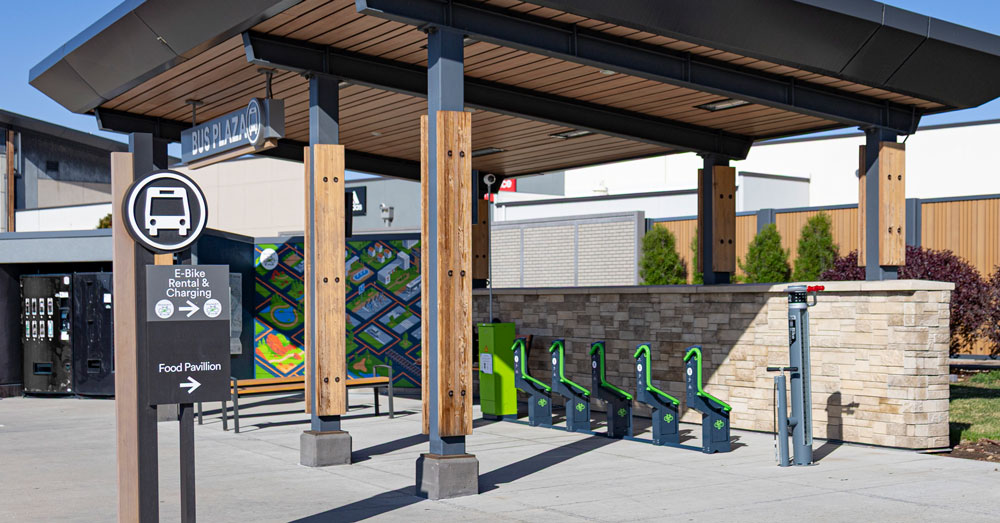
Bikeep stations at a bus shelter

As Smart Commute learned through its Qualified-Income eBike Program, riders also need a convenient and secure place to leave their eBikes when they arrive at work, connect to transit or visit a local destination. This is particularly important for eBikes and other high-value bikes, where concerns about theft can discourage people from riding in the first place. Without reliable parking, a bike may remain a recreational option rather than becoming a practical choice for commuting or running errands.

Bike parking is often treated as a finishing touch to a transportation project. In reality, it can influence whether someone chooses to ride at all. eBike users may also need access to charging to make longer trips and daily commutes more manageable. 
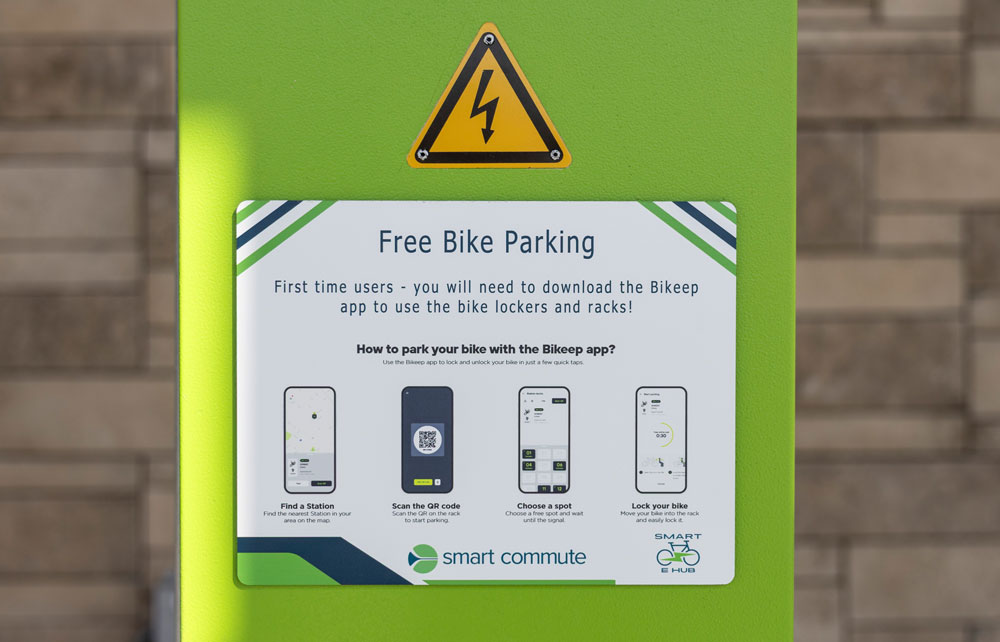
Free Bike Parking sign

To help address these needs, Smart Commute incorporated Bikeep secure eBike parking and charging stations into its Smart eHubs. The system combines secure parking, charging and user access in one solution. Features such as cameras, wired alarms and app-based access provide additional layers of security and convenience. For Smart Commute, these features help make the Smart eHubs a more complete mobility resource, supporting people using their own eBikes/bikes while also creating infrastructure for eBikes offered through its eBike Library rental program.

The goal is not simply to give riders somewhere to leave their bikes. It is to make biking a more practical part of how people move through their communities. The future of transportation is not about finding one solution that works for everyone. It is about giving people multiple choices that work together. A rider might bike to a transit station and take the bus for the remainder of a commute. Someone else might use an eBike to run errands that would otherwise require a car. Another person might try an eBike for the first time through a community lending program before deciding whether it fits their lifestyle. These trips become easier when the supporting infrastructure is in place. Smart Commute’s Smart eHubs are designed to connect riders with transit, low-stress bikeways, trails and local destinations. The Bikeep app also allows users to find and access participating stations throughout the Denver metro area, extending the usefulness of the infrastructure beyond a single location. 

This type of connectivity is an important consideration for communities investing in transportation improvements. Bike parking should not be viewed in isolation. Its location, security features and relationship to nearby destinations all influence how effectively it serves riders. When secure parking and charging are integrated into a broader network, communities can create more opportunities for people to combine transportation options and make trips without driving. 
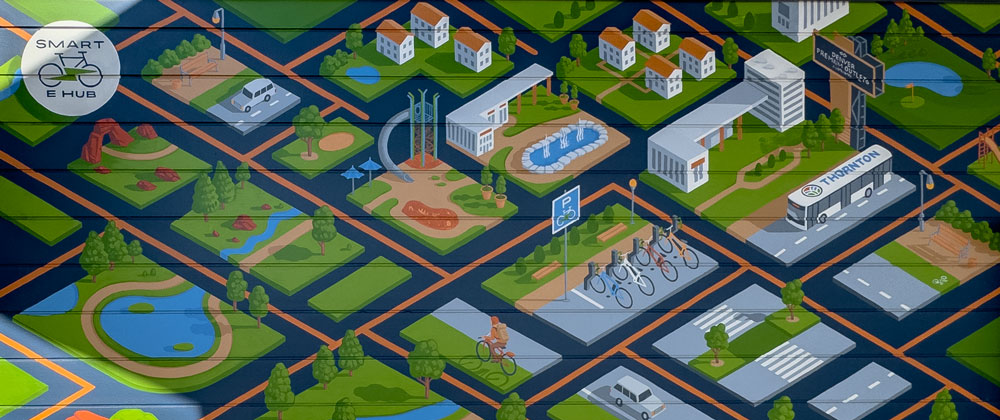
Map of smart hubs

Building better transportation infrastructure also requires more than installing equipment and moving on to the next project. It means listening to the people who use it and learning from their experiences. Smart Commute reports that Bikeep users appreciate the added security features and the ability to contact Bikeep and Smart Commute representatives when they need help accessing the racks or lockers. The organization is seeing repeat users and hopes to continue growing that base. 

Looking Back and Planning Ahead

Just as importantly, Smart Commute is using lessons learned from each installation to inform the design, placement and features of future Smart eHubs. That approach reflects a broader principle for transportation planning: successful infrastructure responds to the needs of the community it serves. What works in one location may need to be adapted for another based on travel patterns, nearby transit, available bikeways and the needs of local riders. 

Partnerships between transportation organizations and infrastructure providers help turn those insights into practical improvements. By combining community knowledge with solutions designed around real rider’s needs, projects can evolve to better support the people who depend on them. 

As communities continue to explore sustainable and accessible transportation, eBikes, secure eBike/bike parking, charging, transit and low-stress cycling infrastructure will play increasingly connected roles. No single investment will solve every transportation challenge, but removing one barrier at a time can make a meaningful difference in how people travel. 

Smart Commute’s work shows what becomes possible when bike parking is treated as an essential part of the transportation network rather than an afterthought. By pairing secure parking and charging with eBike access and connections to other travel options, the Smart eHubs are helping create opportunities for more people to consider biking as part of their everyday routines. 

At Dero, we see this as an important direction for the future of bike infrastructure. The goal is not just to provide a place to park a bike. It is to help communities make biking a convenient, secure and connected option for more people. Because when the infrastructure works for riders, biking has a better chance of working for everyday life.

News

Elevating Biking in 2024: Dero Bike Lockers as Catalysts for Health, E-bikes, and Sustainability

As we stride into the promising horizon of 2024, there’s no better time to embrace positive changes that benefit both personal well-being and the environment. One innovative solution, primed to revolutionize the way we approach cycling, comes in the form of Dero bike lockers. These cutting-edge lockers not only promise enhanced security but also serve as a beacon for incentivizing individuals to embrace biking as a lifestyle choice, fostering health and reducing carbon footprints.

Dero Bike Lockers: More Than Just Secure Storage

Dero bike lockers represent a paradigm shift in bike parking solutions. Beyond mere security, these lockers provide a haven for bicycles and e-bikes alike. The integration of charging capabilities sets them apart, facilitating the usage and adoption of e-bikes—an innovative mode of transportation revolutionizing urban mobility.

Bike Locker Double D2 on white background

Promoting Health Through Biking

The new year often inspires a commitment to healthier lifestyles, and biking plays a pivotal role in this transformation. Regular cycling offers an array of health benefits, from improved cardiovascular fitness to stress reduction and enhanced mental well-being. Dero bike lockers serve as a tangible incentive, providing secure parking that encourages individuals to incorporate biking into their daily routines, fostering a commitment to personal health and well-being.

Empowering E-Bike Usage

E-bikes have emerged as a game-changer in urban commuting, offering an efficient and eco-friendly alternative to traditional transportation methods. However, their widespread adoption faces challenges, notably the need for convenient charging options. Dero bike lockers fill this void by providing charging capabilities, thereby promoting the accessibility and usage of e-bikes. This integration not only facilitates convenience but also encourages more individuals to opt for e-bikes as a sustainable mode of travel.

woman riding e-bike

Championing Sustainability

Reducing our carbon footprint stands as a critical goal for the betterment of the planet. Biking, especially when coupled with e-bike technology, presents an environmentally friendly transportation option. By utilizing Dero bike lockers equipped with charging capabilities, individuals contribute to sustainable practices. Opting for e-bikes powered by clean energy not only reduces emissions but also promotes a greener, more sustainable future.

Conclusion: Pedaling Towards a Brighter Future

In the landscape of transportation evolution, Dero bike lockers serve as beacons of change, promoting biking as a catalyst for health and sustainability. With secure storage and charging provisions, these lockers pave the way for embracing e-bikes, encouraging a healthier lifestyle, and reducing carbon footprints. As we embark on the journey into 2024, let’s leverage the accessibility and functionality of Dero bike lockers to pedal towards a future that prioritizes health, promotes e-bike innovation, and champions environmental sustainability.

Advocacy

The Path to Success: Securing Safe Bike Commuting Routes for Dero Staff

Ben, Colin, & Steph on Bike to Work Day.
everyday is bike to work day.
River view along the Mississippi River Regional Trail.
trail’s website:

“There is no trail maintenance during the winter, including plowing and clearing. Please follow the posted detour routes. Thank you for your patience during this process.”

 
Map of the closed trail section. Note the detour (yellow) takes riders across the river–opposite the side Dero is located.
a 4-lane, 55-mph highway. And when it snows the shoulder all but disappears, leaving us the unpleasant decision to take the lane, despite deadly speed differentials, or hike-a-bike on the unplowed path. However, Dero employees rose to the challenge (as any Bike Friendly Business would), and organized a multi-pronged email and call-in campaign to the City of Fridley and the Anoka County Parks department. We rallied our non-biking coworkers, building owners, and other commuters within the greater Minneapolis biking community to chime in too.
View of the plowed trail.
A plowed trail means Bri is happy. Thumbs up!
Projects

Dero ZAP Snapshot: University of Colorado Colorado Springs

Earlier in the year, we told you about how every day is Bike to Work Day at Dero. You might wonder, how do we track our daily commuting, and what do those metrics look like? That’s where Dero ZAP comes in, our commuter wellness program. With a few clicks, anyone signed up can see how times they rode into work, the amount of CO2 they’ve reduced, the number of calories burned and gallons of gas saved. At Dero, we recently surpassed 14,000 miles biked for 2017!

Not familiar with ZAP? Watch this short video and continue reading below!
Did you know that Dero ZAP isn’t just for business commuter programs? Programs have been successfully launched at campuses across the US. Recently, our ZAP Specialist Tony Spaaij interviewed Kimberly Reeves, the Sustainability Program Manager at the University of Colorado Colorado Springs. Read on to learn about the implementation, results, and highlights of their Dero ZAP program.

Tony: Why did you choose ZAP?

Kimberly: Dero ZAP was the only all-in-one program we could find. Their RFID tags allowed for easy participation that helped move our bike incentive program away from self-reporting. And the online dashboard provides easy access to information for both participants and program managers.

What is your favorite part of using ZAP?

My favorite part of using Dero ZAP are the affirming stories from participants. Our front runner is a facilities staff person, and he’ll be the first to tell you how far ahead of the second place rider he is. There’s also a chemistry professor who can’t get enough of the ‘chirp’ every time he gets to campus. He says it’s like a little cheer that he biked another day; he rides for the health benefits.

What was your experience implementing the program and getting people to participate?

Thanks to our Facilities Services staff, we were fortunate enough to get our first (of five) stations installed before our annual Bike Jam/Bike to Campus Day. At that one event, we were able to sign-up 60 participants. Since then, we’ve held more, smaller bike events and are currently at 85 participants. I think our riders appreciate the elimination of self-reporting data. We’re hoping this upcoming year, since we have all five stations installed as of March 2017, we’ll have more participation.

What have your results been since implementing the program?

That original station is by-far the most frequented, but the data has shown two other entrances on campus that personally, I don’t see on a daily basis and wouldn’t have expected that much traffic. These stats will help advocate for bike infrastructure in these priority areas.

What is your favorite program feature?

My favorite program feature is the ease of randomly handing-out prizes. I’m able to give a concrete goal for the month, and the dashboard provides the ability to sort, draw a winner and automatically alert them with an email. This feature also helps us keep a more accurate inventory of prizes.

Why is it important to promote wellness at your organization?

With the location of our campus on a bluff and 15-30 minutes from amazing hiking trails (not to mention the trails on campus,) promoting wellness seems to be a way of life at UCCS. Active living not only keeps us healthy, but also hopefully provides ways in which we can deal with life’s stresses in a positive way.

And how does ZAP contribute to promoting wellness?

Dero ZAP has been a forum for talking about why colleagues bike to campus. These conversations sometimes involve saving money on parking or reducing their use of single-occupancy vehicles, but no matter the reason, health is usually a main factor.
Interested in learning more about how you can start a Dero ZAP program? Register for a webinar or contact us!
Bike Storage, Tips

Campus Bike Parking: An Introductory Course

A+ Bike Parking

First and foremost, quality bike parking on any campus means more than just something to lock to (that would barely qualify as a passing grade). Good bike racks and bicycle storage should be u-lock compatible, protect students’ bikes from the elements, and be numerous enough to meet demand. Everyone hates searching for a spot to park when you’re already late for class!

Bike shelters are a great example of quality bicycle storage that protects students’ bikes from bad weather. In the above photo, a student at St. Olaf College in Northfield, MN checks out a bike from the campus bike share program. The Kolo Shelter is a perfect solution for fitting two-tiered systems, like the Dero Decker, to double up on bike parking capacity.

indoor bike room A bike room at Portland State University.

It should be no surprise that bike rooms receive an “A” grade in our book. Fully enclosed, secure parking, like in Portland State University’s Bike Garage, includes both two-tier and floor-mounted parking options, which accommodates many different types of bikes. Many bike rooms are furnished with public bike repair amenities, such as the Fixit repair stand and Air Kit bike pumps.

Keep Students Rolling

public bike repair stand The Dero Fixit public bike repair stand.

Bike repair stands don’t only belong in bike rooms. They’re perfect for busy bike paths, in or outside student residence halls, and in central public spaces on campus. The Dero Fixit provides all the necessary tools so students can perform basic bike maintenance. Add either an Air Kit 2 or Air Kit 3, and students have the ability to repair flats or top off the air in their tires.

Public bicycle repair stands are also great educational opportunities. Many campuses teach fix-a-flat or tune-up classes at the stands, so students can learn how to use all of the tools available to them. Here are a few videos that colleges and universities made to highlight their campus bike repair:

University of Iowa, UT Arlington, Tufts University, Penn State, University of Oregon.

Encourage Active Transportation

College campuses have high numbers of active people in a concentrated area. Dero ZAP is our automated commuter tracking program and is used to incentivize and gather data on students’ commutes at campuses across the country.

At the University of Minnesota, Dero ZAP has been used to track both faculty and students’ commutes since 2012. Steve Sanders, Alternative Transportation Manager at the U, says that “Since the program’s inception in 2012 we’ve seen increased bicycle mode share and a deepened cycling culture. We’ve also been extremely pleased by how many women are actively participating – over 40% of participants are women.”

For more information on Dero ZAP, watch our “How it works” video.

Cultivate Campus Identity

bike rack on college campus St. Olaf Collage chose to highlight their logo in this custom laser-cut Bike Bike Rack.

As more colleges and universities invest more resources into their biking infrastructure, custom racks are a great way for schools to stand out and add a personalized touch to their bike parking. At Dero, we’ve had years of experience making custom projects a reality. All we need is your school’s logo or mascot.

bike friendly campus logo

Feel confident you’ve mastered Campus Bike Parking 101? Time to take your biking game to the next level: consider applying for Bicycle Friendly University (BFU) status through the League of American Bicyclists. Dero has been a Gold certified Bike Friendly Business for over 4 years (you can read our story here), and we hope you “ace” your BFU application!