Case Study, Dero, Projects

Beyond the Bike Rack: Building a More Connected Future for Transportation

Making biking a practical everyday transportation option takes more than access to a bike. It takes the right infrastructure to make every ride feel convenient, secure and accessible. As communities look for ways to expand transportation options, one thing is becoming increasingly clear, providing access to a bike is only part of the solution. Riders also need a safe place to park, convenient access to charging eBikes and connections to other transportation options that make everyday trips easier.

At Dero, we believe bike parking plays an important role in building that connected transportation network. Our work with Smart Commute in the north Denver metro area demonstrates how thoughtful infrastructure can help remove barriers to biking and support more flexible ways to get around.

Smart Commute is a nonprofit transportation management organization (TMO) working to expand transportation choices across the north Denver metro area. Through partnerships with local governments, employers, transit agencies and other organizations, Smart Commute develops programs that help people get where they need to go without relying solely on a car. Its work ranges from carpooling and vanpooling to innovative programs like an eBike Library and low-stress bike routes mapping.

One of its most innovative efforts is the development of smart eHubs, which provide free and secure bike parking and charging for both traditional bikes and eBikes. The idea behind these eHubs addresses a challenge that can easily be overlooked in conversations about active transportation: access to a bike does not automatically make biking a viable option for daily life. 
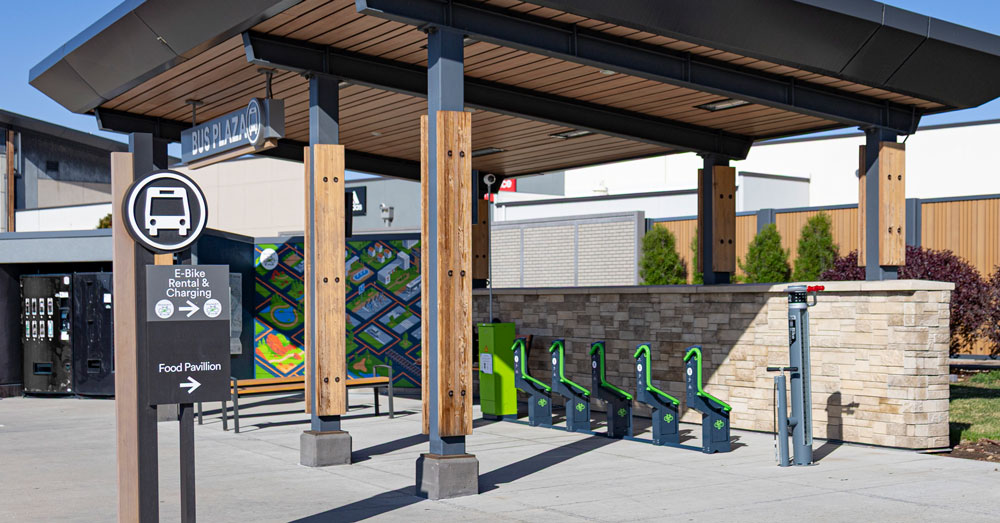
Bikeep stations at a bus shelter

As Smart Commute learned through its Qualified-Income eBike Program, riders also need a convenient and secure place to leave their eBikes when they arrive at work, connect to transit or visit a local destination. This is particularly important for eBikes and other high-value bikes, where concerns about theft can discourage people from riding in the first place. Without reliable parking, a bike may remain a recreational option rather than becoming a practical choice for commuting or running errands.

Bike parking is often treated as a finishing touch to a transportation project. In reality, it can influence whether someone chooses to ride at all. eBike users may also need access to charging to make longer trips and daily commutes more manageable. 
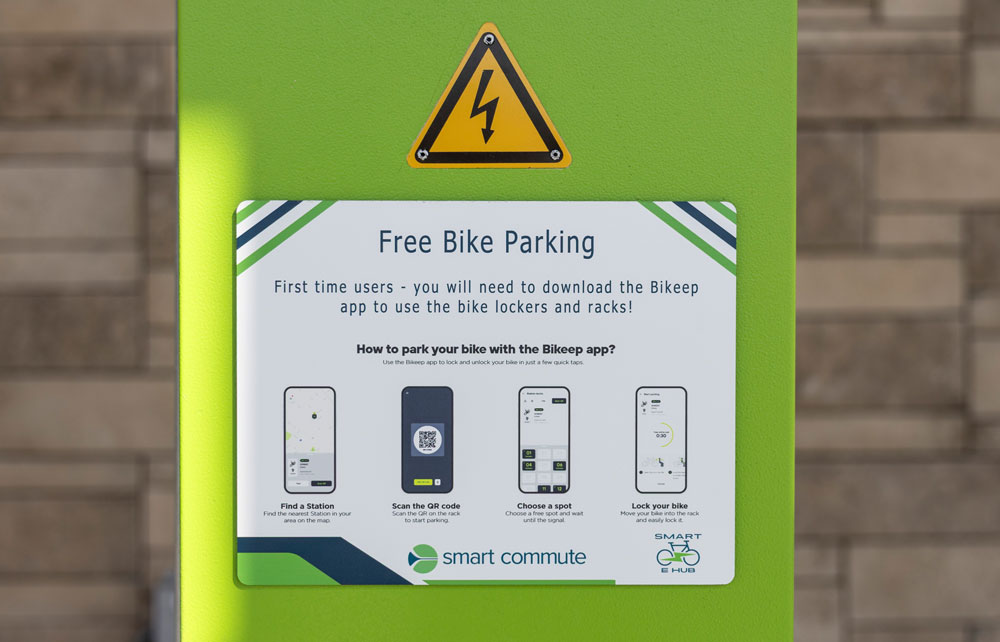
Free Bike Parking sign

To help address these needs, Smart Commute incorporated Bikeep secure eBike parking and charging stations into its Smart eHubs. The system combines secure parking, charging and user access in one solution. Features such as cameras, wired alarms and app-based access provide additional layers of security and convenience. For Smart Commute, these features help make the Smart eHubs a more complete mobility resource, supporting people using their own eBikes/bikes while also creating infrastructure for eBikes offered through its eBike Library rental program.

The goal is not simply to give riders somewhere to leave their bikes. It is to make biking a more practical part of how people move through their communities. The future of transportation is not about finding one solution that works for everyone. It is about giving people multiple choices that work together. A rider might bike to a transit station and take the bus for the remainder of a commute. Someone else might use an eBike to run errands that would otherwise require a car. Another person might try an eBike for the first time through a community lending program before deciding whether it fits their lifestyle. These trips become easier when the supporting infrastructure is in place. Smart Commute’s Smart eHubs are designed to connect riders with transit, low-stress bikeways, trails and local destinations. The Bikeep app also allows users to find and access participating stations throughout the Denver metro area, extending the usefulness of the infrastructure beyond a single location. 

This type of connectivity is an important consideration for communities investing in transportation improvements. Bike parking should not be viewed in isolation. Its location, security features and relationship to nearby destinations all influence how effectively it serves riders. When secure parking and charging are integrated into a broader network, communities can create more opportunities for people to combine transportation options and make trips without driving. 

Map of smart hubs

Building better transportation infrastructure also requires more than installing equipment and moving on to the next project. It means listening to the people who use it and learning from their experiences. Smart Commute reports that Bikeep users appreciate the added security features and the ability to contact Bikeep and Smart Commute representatives when they need help accessing the racks or lockers. The organization is seeing repeat users and hopes to continue growing that base. 

Looking Back and Planning Ahead

Just as importantly, Smart Commute is using lessons learned from each installation to inform the design, placement and features of future Smart eHubs. That approach reflects a broader principle for transportation planning: successful infrastructure responds to the needs of the community it serves. What works in one location may need to be adapted for another based on travel patterns, nearby transit, available bikeways and the needs of local riders. 

Partnerships between transportation organizations and infrastructure providers help turn those insights into practical improvements. By combining community knowledge with solutions designed around real rider’s needs, projects can evolve to better support the people who depend on them. 

As communities continue to explore sustainable and accessible transportation, eBikes, secure eBike/bike parking, charging, transit and low-stress cycling infrastructure will play increasingly connected roles. No single investment will solve every transportation challenge, but removing one barrier at a time can make a meaningful difference in how people travel. 

Smart Commute’s work shows what becomes possible when bike parking is treated as an essential part of the transportation network rather than an afterthought. By pairing secure parking and charging with eBike access and connections to other travel options, the Smart eHubs are helping create opportunities for more people to consider biking as part of their everyday routines. 

At Dero, we see this as an important direction for the future of bike infrastructure. The goal is not just to provide a place to park a bike. It is to help communities make biking a convenient, secure and connected option for more people. Because when the infrastructure works for riders, biking has a better chance of working for everyday life.

Charging Ahead

e-bike icon

Charging Ahead

An E-Bike Accommodation Guide for Architects and Property Owners


    Introduction

    The growing popularity of e-bikes has significantly influenced the design requirements for bike parking facilities. Unlike traditional bicycles, e-bikes tend to be heavier, larger, and come in a wider variety of shapes due to their integrated motors, batteries, and reinforced frames. These factors have implications for the types of bike racks used and the spacing allocated in parking areas. Property owners and planners must account for these changes to ensure their facilities can accommodate modern bicycle users effectively.

    E-Bike Parts

    E-bikes can be operated without electrical assistance just like a traditional bike, but the assistance of a battery-powered motor enables riders to enjoy extended range, easier hill climbs, and reduced effort during their journey.

    E-bike batteries are typically lithium-ion, for their high energy density, lightweight design, and long lifespan. Most batteries can be removed and charged away from the bike.

    Charging only certified batteries with the recommended charger, avoiding overcharging, and storing the battery at moderate temperatures are important practices for preserving the battery’s health.

    e-bike on white background e-bike battery on white background e-bike charger on white background

    Providing Power

    Catering to the growing demand for e-bike charging points is a smart move for any property looking to stay compatible with today’s cycling needs. As with any electrical system, thoughtful planning and procedures must be followed to implement a solution safely and effectively.

    Here are some precautions and tips to consider when providing electrical hookups for e-bike charging.

    charging icon

    Most standard e-bike chargers draw 4 amps continuously. We recommend a maximum of (4) receptacles per 20A circuit.

    charging icon

    Display clear signage near each outlet identifying how many amps each outlet can safely provide per the location’s electrical system. The use of fast chargers, which draw a higher load, should be discouraged.

    charging icon

    Any electrical safety device, such as a timer switch, should be certified by a nationally recognized testing facility.

    charging icon

    Always consult a locally licensed electrician when planning new circuits and use caution when working with electricity!

    Safe and Secure

    Because e-bikes are typically more expensive than traditional bicycles, they require enhanced security measures when providing parking. Using racks with thick, square tubing makes them more resistant to common theft tools like pipe-cutters.

    To further improve security, install these racks in a monitored area, such as under surveillance cameras or within restricted-access spaces, ensuring safer storage for e-bike users.

    Charging points should incorporate time limits to help prevent overcharging and extend battery life.

    square tubing icon

    Square tubing provides resistance to pipe-cutters.

    monitored area icon

    Place racks in a monitored area

    timed charging icon

    Timed charging helps preserve battery health

    E-Bikes
    Are Getting
    Big

    Battery powered assistance makes it much easier to pedal heavier loads with larger bikes, like cargo bikes. In fact, most bikes of this type being sold today are now electric, and are replacing cars for many individuals and families.

    In the next section we’ll look at how to choose racks and set appropriate spacing for these larger bikes.

    family riding on electric cargo bike

    Space Use

    Standard bike rack spacing, which often assume bikes will be parked tightly together, may lead to overcrowding and inconvenience if not adjusted for larger bikes. Providing additional clearance between a number of racks and ensuring aisles are wide enough for users to navigate with bulky e-bikes will improve usability and encourage more riders to use the facility.

    Be aware that many cargo bikes will not be centered on the rack when parked. The diagrams on this page illustrate how cargo bikes (shown in blue) compare to a traditional bike (gray) when parked on a rack.

    space-use measurements with various bikes

    Let us help!

    The most efficient and user-friendly way to allow space for cargo bikes will vary considerably from site to site. Dero can work with you to design a free CAD layout that maximizes your space while ensuring usability and accessibility.

    Learn More

    The Right Racks

    E-bikes often weigh between 45 and 80 pounds, with some cargo models exceeding 100 pounds. While racks designed to hang bikes vertically may be sturdy enough to handle the heavier loads, your users may not be able to raise their bikes onto these racks.

    When planning to accommodate e-bikes, be sure that at least a portion of your parking options include racks that leave the bike on the ground.

    bike room with horizontal and vertical bike racks

    This bike room employs a combination of vertical racks for space-efficiency and horizontal racks for better compatibility with the wide variety of bike sizes and styles commonly seen today.

    e-bike charging products

    Charging Solutions by Dero

    E-bike sales continue to outpace those of electric vehicles in the United States, and as their popularity grows so too, does the demand for the infrastructure to support their use. Dero provides a complete lineup of products designed to allow e-bike users to charge their ride while securely parked. Explore our product options below and help keep those e-bikes rolling!

    See our E-Bike Charging Products

    Got Questions?


      News

      Charge. Lock. Ride. The Future of Micromobility is Here!

      The way we move is changing, and Dero is keeping pace. We’re thrilled to introduce our updated line of E-Bike Charging Racks—innovative solutions designed to power the growing micromobility movement. Whether you’re managing a bike room, a transit hub, or a campus, our charging racks provide a secure and convenient way for riders to charge up while they park. 

      ✅ Charge and lock two bikes or scooters per rack

      ✅ Designed for indoor and covered outdoor spaces

      ✅ 4-hour timer prevents overcharging

      ✅ Durable, tamper-resistant construction

      Meet the Lineup:

      Dero eDecker – Premium, two-tier storage with built-in charging, ideal for high-capacity bike parking areas. 

      eSwerve™ – Sleek design, built for bikes and scooters with a timed charging cycle to protect battery health.

      eDowntown™ – Sturdy and stylish, this rack accommodates urban riders looking for a reliable charge. 

      eBeam™ – Compact and efficient, perfect for maximizing space while keeping e-bikes powered. 

      eHitch™ – Smart and secure solution, ideal for indoor & covered locations. 

      Single + Double e-bike Lockers – Unmatched security, allowing bike charging while also securing the batteries.

      Our E-Bike Charging Racks feature a 4-hour timed charging cycle, ensuring that e-bike and scooter batteries get the charge they need without the risk of overcharging. This helps preserve battery life, maximize efficiency, and provide a safer charging experience for riders. Designed for convenience and longevity, our racks make it easy to power up while preventing unnecessary battery strain.

      Projects, Streetscapes, Tips

      Partnering with Purpose: Dero and Local Arts Center Create a Bike-Friendly Space

      Dero was thrilled to partner with the Chicago Fire Arts Center (CFAC), located at the historic intersection of 38th and Chicago, also known as George Floyd Square. The CFAC reached out to Dero for help in designing a bike parking solution that could be placed over their newly installed permeable pavers next to the parking lot. Since removing the pavers to install a concrete foundation wasn’t an ideal option, Dero offered a creative alternative.

      Orange rail-mounted Dero Downtown Racks on top of pavers in parking lot

      Dero recommended a rail-mounted bike rack system. These racks are designed to “float” over surfaces like brick, gravel, or other materials that typically aren’t compatible with traditional bike racks. The team proposed using the Dero Downtown Rack, which boasts a square-tube design for enhanced strength and added protection against cutting. Not only is this design more secure, but it also offers a modern, distinctive appearance that sets it apart from standard round-tube racks. The Downtown Rack starts as a 2-inch square tube of high-quality, USA-sourced steel, which is then bent, welded, and powder-coated at Dero’s Lakeland, Florida, manufacturing facility.

      After laying out the plan in AutoCAD, Dero recommended positioning the racks at a 45-degree angle. This placement minimized any interference with the rain garden to the north and nearby parking spaces to the south. The CFAC selected a bold orange powder-coated finish for the racks. However, the rails themselves were left with a galvanized finish, which is standard for Dero. Since the rails are in constant contact with the ground and exposed to water and Minnesota’s salty winters, a powder-coat finish could wear out prematurely. The galvanization process provides long-term protection against rust, ensuring durability over time.

      These bike racks were generously donated to CFAC as part of Dero’s ongoing commitment to giving back to the South Minneapolis community, a place many of its employees proudly call home.

      Bike Parking for Colleges and Universities

      Bike Parking for College and University Campuses

      With decades of experience and a deep understanding of campus dynamics, Dero provides unrivaled expertise in planning, designing, and implementing secure and efficient bike parking solutions for institutions of higher learning. From large-scale installations to tailored designs that fit specific layouts, we have helped numerous colleges and universities address their unique challenges and put their campus bike parking facilities on the path to success.

      Let’s work together to create a campus environment where biking is not only encouraged but also made safe, convenient, and enjoyable for all. Explore some of our most popular products and be sure to read our handy reference guides to brush up on your bike parking basics.

      checkmark
      QUALITY
      PRODUCTS
      checkmark
      EXPERT
      SERVICE
      checkmark
      HELPFUL
      RESOURCES
      checkmark
      INSTALLATION
      AVAILABLE
      student parking bike on bike racks

      Creating spaces for that bikes that are secure, space-efficient, and integrated into the fabric of campus life

      Dero offers a range of high quality solutions to help campuses meet their uniquely high demand for bike storage that is both secure and maximizes space-efficiency.

      See our top campus products

      Ask Steve!

      In his 34 years at the University of Minnesota Transportation Department, Steve Sanders employed a mix of strategic infrastructure upgrades and a robust bike commuting rewards program to improve and encourage bicycle commuting on the school’s expansive campus.

      Now Sanders has joined Dero’s team to help campuses across the country raise their cycling standards and build more accommodating environments for any member of their student body, faculty, or staff that wants to bike.

      Steve Sanders headshot

      Build a Successful Campus Bike Program

      The payoffs to promoting bicycling on college campuses are many, from healthier students and faculty, to dramatic reductions in traffic congestion and carbon emissions. Whether you are just getting started, or are looking to level up your existing program, Dero is here to help you get things rolling. Download our handy guide below and feel free to contact us to chat with our in-house campus transportation expert.

      Download the Guide
      campus guide pages

      More guides from our reference library…

      Dero provides these free resources to help you get up to speed on the basic principles of bike parking in a variety of settings, and to help you start or level up your campus bike program.

      See additional resources >>

      Let’s start the conversation.

      From battling bike theft to optimizing space utilization and everything in between, we can help you navigate the complex landscape of bike parking to create vibrant hubs of activity and sustainability, where biking isn’t just a mode of transportation, but a way of life. Send us a message below and let’s see what we can achieve together.